Yellow anaconda
Eunectes notaeus
|
Some would call them
little sweetie-pies. Others would call them ******* great
sweetie-pies
They are impressive, but
do poo a lot - and they are SMELLY
snakes
|
|
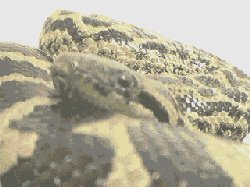
This is Kathryn, a yellow anaconda I
once had. Over the years she shared vivaria with rainbow
boas and boa constrictors, finally being housed on her
own.
|
Of all the species of boid which I have
kept, I find yellow anacondas to be the most difficult snake on which
to get reliable information. Reports of their adult length vary from
less than 2 metres to over 4 metres. Reports of thier natures vary
from "placid" to "vicious". So, in my experience.....
|
Contrary to many books, they
can be fussy feeders. While young they eat everything and
anything, but as they get older, they can become more
difficult. While you should offer food each week, they may
be fussy and only eat once every third or fourth week. They
seem to have "phases" - they will only eat rats for some
weeks, then they will only eat "small
things"
|
They bite a lot when young,
but as they get bigger they seem to stop biting quite so
often.
But they are unpredictable. I was
once showing a yellow to a friend when she struck out from
my arms, bit my friend on the nose quite badly, and then she
turned and bit my hand. On another occasion without warning
a yellow struck at my face and bit both
hands.
|
|
They will spend most of their
time submerged in water, so ensure their water is at the
same temperature as the ambient temperature of the
vivarium.
|

|
|
They will forfeit heat for
water which can lead to the snake becoming too cool to
maintain its body function and leave them open to
infections. Yellow anacondas can be very nervous snakes and
may mess themselves at the least worry.
|
They are strong snakes -
quoting a fellow anaconda - keeper
|
one of the most suprising things about these snakes
is their massive strength, handling a 12 foot retic seems
like a corn snake after moving my male yellow for viv
cleaning
|